
Reshaping of Semiconductor Supply-Demand Pattern: Analysis of Structural Changes and Investment Opportunities in the Chip Industry in H2 2026
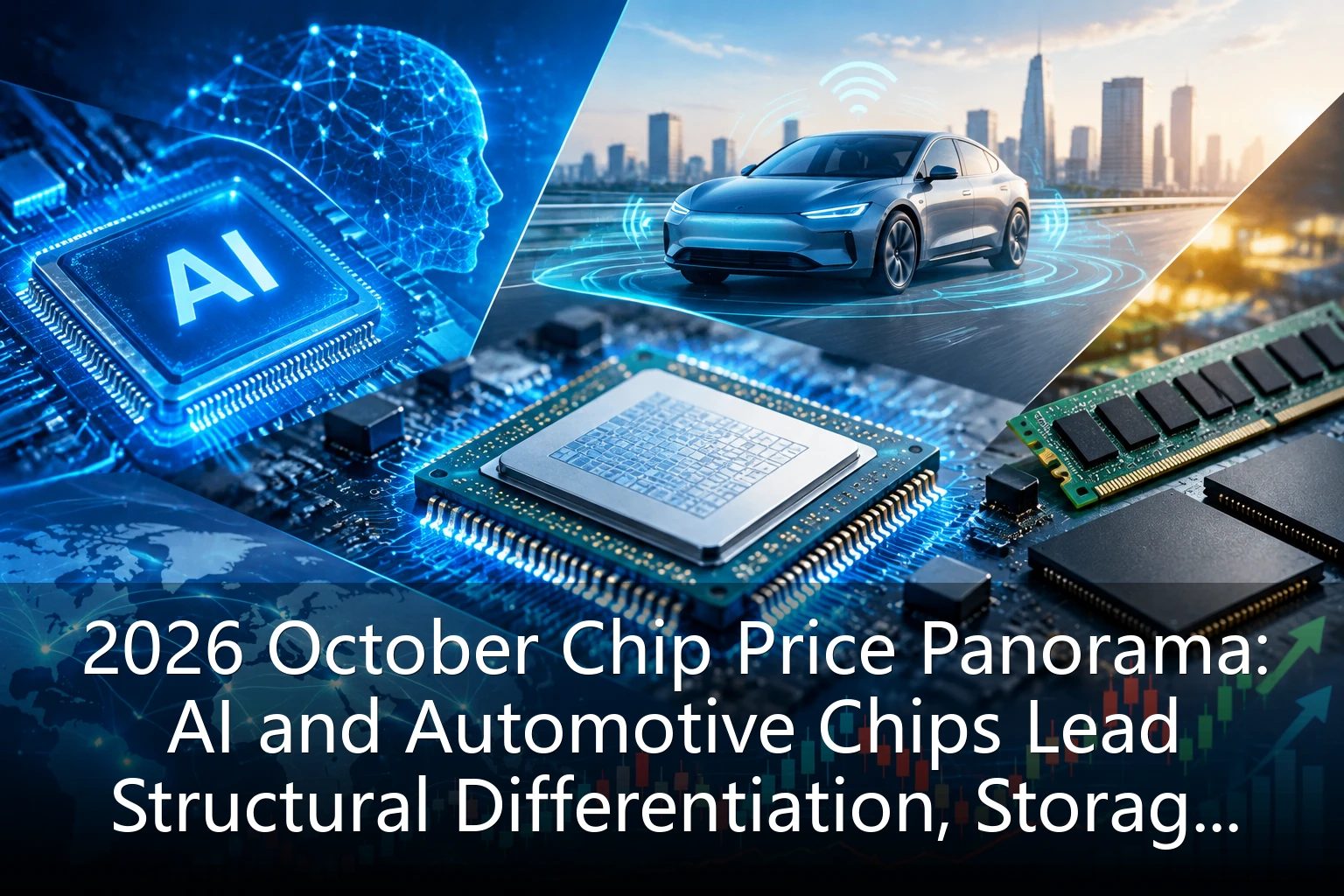
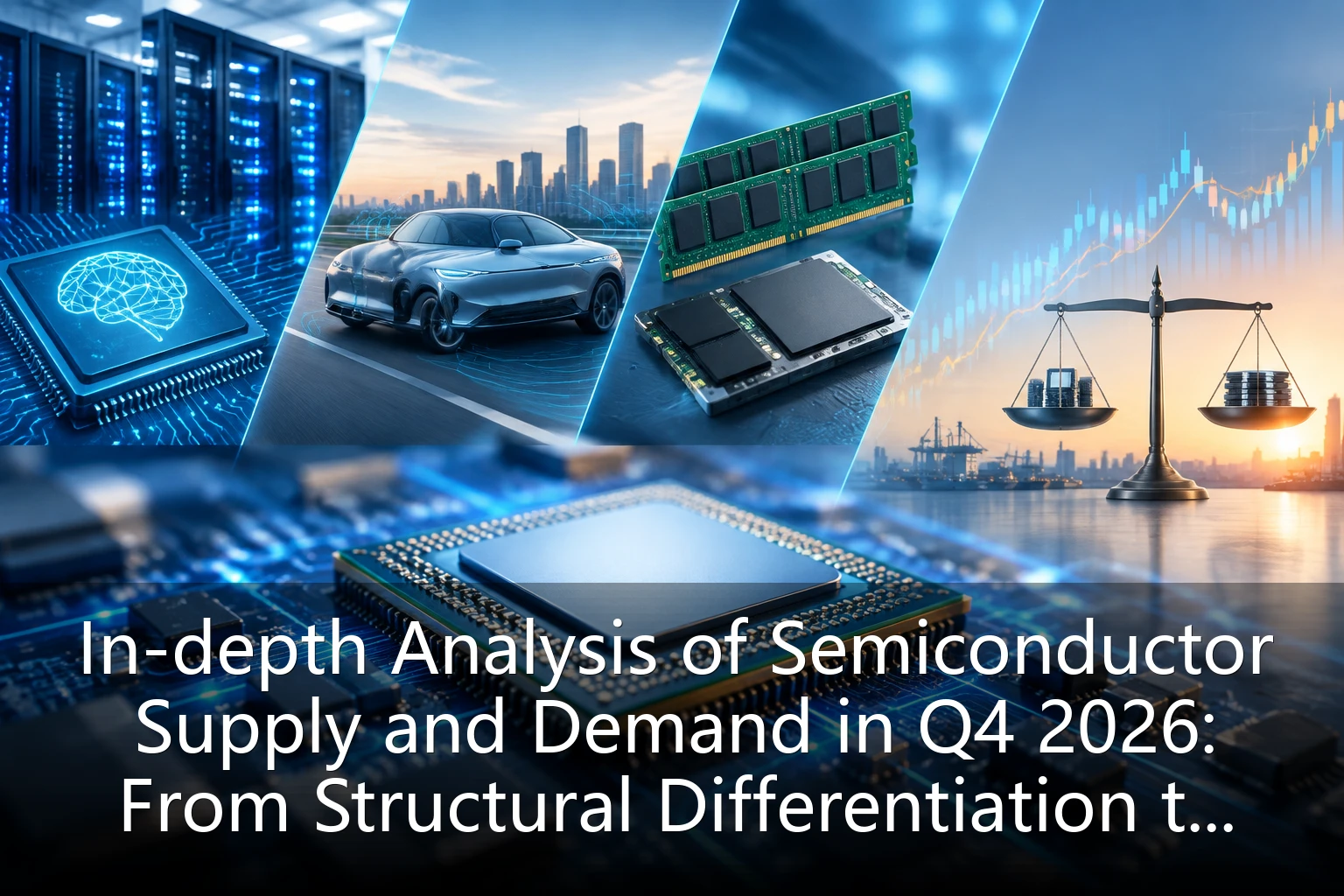
\n\nIn the second half of 2026, the global semiconductor industry is undergoing a profound reshaping of its supply-demand pattern. With the rapid development of emerging applications such as artificial intelligence, autonomous driving, and the Internet of Things, the semiconductor market is showing unprecedented structural differentiation. The supply-demand differences between advanced and mature processes, as well as between chips for different application fields, are becoming increasingly significant. This change not only affects chip price trends but is also reshaping the investment logic and market landscape of the entire semiconductor industry.
\n\nI. Current Semiconductor Supply-Demand Status: From Oversupply to Structural Shortage
\n\nThe semiconductor market in the first half of 2026 showed characteristics completely different from previous years. After experiencing oversupply in 2023-2024 and gradual adjustments in 2025, the market entered a new phase in the second half of 2026—structural shortages coexisting with local surpluses. According to the latest data analysis from Singapore Exchange Technology and Semiconductor Insights, the current supply-demand pattern of the semiconductor market shows obvious "dual-track" characteristics.
\n\nIn the advanced process field, especially for 7nm and below processes, capacity remains tight due to strong demand from applications such as AI large model training, high-performance computing, and advanced automotive electronics. The advanced process capacity utilization rates of leading wafer foundries like TSMC and Samsung remain above 95%, with delivery cycles generally extended to 4-6 months. In contrast, the mature process (28nm and above) market presents a different picture. Although the overall supply and demand tend to balance, performance varies across different segments.
\n\nII. Supply-Demand Differences in Segmented Markets: Differentiation in AI, Automotive, and Consumer Electronics
\n\nAI Chips: Explosive Demand Coexisting with Capacity Bottlenecks
\n\nChip demand in the artificial intelligence field continued to explode in the second half of 2026, especially for high-performance GPUs, dedicated AI acceleration chips, and HBM (High Bandwidth Memory) products. With the iterative upgrades of large language models such as ChatGPT-5 and Gemini Ultra, and the popularization of multimodal AI applications, the demand for computing power has grown exponentially. However, limited by bottlenecks in advanced process capacity and advanced packaging technology, the growth of AI chip supply cannot fully match the growth rate of demand, leading to continuous market tightness.
\n\nAccording to industry data, in the third quarter of 2026, the delivery cycle of high-end AI processors such as NVIDIA H200 and AMD MI300X has extended to over 6 months, with prices increasing by about 15% compared to the same period in 2025. Meanwhile, the AI chip ecosystem is also expanding rapidly. In addition to traditional GPUs, the demand for dedicated AI chips such as TPUs and NPUs is also growing rapidly, further exacerbating the supply-demand tension of related chips.
\n\nAutomotive Chips: From Shortage to Structural Adjustment
\n\nAfter experiencing severe shortages in 2022-2023, the automotive chip market entered a structural adjustment phase in 2026. As the global automotive industry deepens its transformation toward electrification and intelligence, the demand structure for automotive chips has undergone significant changes. The supply of traditional MCUs (Microcontrollers) and power semiconductors tends to stabilize, while the demand for high-performance computing chips, sensor chips, and in-vehicle communication chips continues to grow.
\n\nNotably, the automotive chip market shows obvious stratification characteristics. The supply of high-performance computing platforms and autonomous driving chips required for high-end electric vehicles remains tight, while chips needed for traditional fuel vehicles and entry-level electric vehicles are adequately supplied. This differentiation creates a "tight high-end, loose low-end" pattern in the automotive chip market.
\n\nConsumer Electronics: Moderate Recovery and Structural Opportunities
\n\nThe consumer electronics market showed a moderate recovery trend in the second half of 2026. Traditional consumer electronics markets such as smartphones and PCs are approaching saturation, but emerging fields such as AIoT (Artificial Intelligence of Things) devices, wearable devices, and smart home products show strong growth potential. This change has also led to structural differentiation in the consumer electronics chip market.
\n\nThe supply of advanced process SoCs (System-on-Chips) and high-end memory chips required for high-end smartphones is tight, while chips needed for mid-to-low-end smartphones and traditional consumer electronics are adequately supplied. Meanwhile, with the popularization of AI functions, consumer electronic devices are showing rapid growth in demand for dedicated chips such as NPUs and low-power AI chips, bringing new growth opportunities for related chip suppliers.
\n\nIII. Price Trend Analysis: Increasing Differentiation and Structural Price Increases
\n\nIn the second half of 2026, semiconductor chip price trends showed obvious differentiation characteristics. According to market monitoring data from Singapore Exchange Technology and Semiconductor Insights, there are significant differences in the price change trends of different types and different process chips.
\n\nIn the advanced process field, chip prices for 7nm and below processes continued to rise, with AI chips and high-end processors showing the most significant price increases. TSMC and Samsung respectively increased their quotes for advanced processes in the third quarter of 2026, with an average increase of about 10%. This price increase is mainly limited by the scarcity of advanced process capacity and high R&D costs.
\n\nIn contrast, the price trend of mature process chips is relatively stable. Chip prices for 28-40nm processes basically remained stable, while chip prices for 65nm and above mature processes even slightly decreased. This price differentiation reflects the relatively abundant capacity of mature processes and the characteristics of fierce market competition.
\n\nIn the application field, prices of AI chips, automotive chips, and high-end memory chips continue to rise, while prices of traditional consumer electronics chips remain stable or slightly decrease. This price differentiation has caused significant changes in the profit structure of the semiconductor industry, with profit margins of advanced processes and AI-related chips continuously improving, while profit margins of mature processes and traditional chips face pressure.
\n\nIV. Driving Factors of Supply-Demand Changes: Dual-Drive of Technology and Applications
\n\nTechnological Progress and Process Differentiation
\n\nAdvances in semiconductor technology are an important driving force for changes in the supply-demand pattern. As Moore's Law approaches physical limits, the R&D and manufacturing costs of advanced processes are growing exponentially, which is widening the technical and cost gap between advanced and mature processes. TSMC's R&D investment in 3nm and 2nm processes has exceeded $30 billion, while the R&D investment in 28nm processes is less than $1 billion. This huge cost difference has led semiconductor manufacturers to concentrate resources on advanced processes, while expansion of mature processes is relatively cautious.
\n\nMeanwhile, the rapid development of advanced packaging technologies such as Chiplets has brought new possibilities to the semiconductor industry. By integrating multiple small chips with different functions in one package, high-performance computing can be achieved without relying on the most advanced processes, which opens up new application space for mature processes and also alleviates the capacity pressure of advanced processes to some extent.
\n\nApplication Innovation and Demand Structure Changes
\n\nApplication innovation is another important driving force for changes in semiconductor demand structure. The rapid development of emerging applications such as AI, autonomous driving, and the Internet of Things has put forward new requirements for chip performance, power consumption, and functionality, leading to significant changes in chip demand structure.
\n\nIn the AI field, as the parameter scale of large models continues to expand and computing demand grows exponentially, the demand for high-performance computing chips and high-speed memory chips continues to grow. Meanwhile, the popularization of AI applications has also promoted the development of edge computing chips, making low-power, high-performance edge AI chips a new growth point.
\n\nIn the automotive field, the dual drive of electrification and intelligence has caused fundamental changes in the demand structure of automotive chips. The demand for chips such as MCUs and power semiconductors required by traditional vehicles tends to stabilize, while the demand for battery management chips, motor control chips for electric vehicles, and sensor chips, high-performance computing chips for autonomous driving is growing rapidly.
\n\nV. Future Trend Prediction: Structural Differentiation Will Continue
\n\nLooking ahead to the second half of 2026 and beyond, the supply-demand pattern of the semiconductor industry will continue to show characteristics of structural differentiation. According to the analysis of Singapore Exchange Technology and Semiconductor Insights, the following trends are worth noting:
\n\n- \n
- The differentiation between advanced and mature processes will intensify: With the continuous development of applications such as AI and high-performance computing, the capacity tightness of advanced processes will exist for a long time, while mature processes will face more fierce market competition and price pressure. \n
- The boundary between dedicated chips and general-purpose chips will blur: With the diversification of application scenarios, the demand for dedicated customized chips will continue to grow, while general-purpose chips will face more fierce market competition. \n
- Regional supply chain restructuring will accelerate: Geopolitical factors and supply chain security considerations will promote the regional restructuring of the semiconductor supply chain, and the semiconductor industries in different regions will show differentiated development paths. \n
- Green and low-carbon will become a new competitive focus: As global attention to climate change and sustainable development increases, low-power, high-efficiency chip design will become a new competitive focus, and will also affect the supply-demand pattern of the semiconductor industry. \n
VI. Investment Strategy Recommendations: Seizing Structural Opportunities
\n\nIn the face of profound changes in the supply-demand pattern of the semiconductor industry, investors need to adopt more precise and differentiated investment strategies. Based on the analysis of the current supply and demand situation of the semiconductor market, Singapore Exchange Technology and Semiconductor Insights propose the following investment recommendations:
\n\n- \n
- Focus on the advanced process and AI chip industry chain: Advanced process wafer foundries such as TSMC and Samsung, as well as AI chip design companies such as NVIDIA and AMD, will continue to benefit from the supply-demand tight situation and are worth attention. \n
- Grasp the structural opportunities of mature processes: Although mature processes face price pressure as a whole, their applications in fields such as automotive electronics and industrial control remain robust, and competitive mature process manufacturers are expected to gain market share. \n
- Emphasize the semiconductor equipment and material segments: With the continuous expansion of semiconductor capacity, the semiconductor equipment and material segments will experience continuous growth, especially in advanced process equipment and third-generation semiconductor materials. \n
- Pay attention to Chiplet and advanced packaging technologies: The development of Chiplet and advanced packaging technologies will bring new growth points to the semiconductor industry, and related companies are expected to achieve differentiated competition based on mature processes. \n
- Diversify investments to reduce risks: The semiconductor industry has obvious cyclical characteristics, and investors should adopt a diversified investment strategy, balancing allocations across different processes and application fields to reduce risks in a single area. \n
In summary, in the second half of 2026, the semiconductor industry is in a critical period of reshaping its supply-demand pattern, with increasing differentiation between advanced and mature processes and between different application fields. Investors need to deeply understand this structural change, grasp the investment opportunities within it, while being vigilant about potential risks, in order to achieve stable investment returns in the complex and ever-changing market environment.
\n\nWith the continuous development of emerging applications such as AI, autonomous driving, and the Internet of Things, the semiconductor industry will usher in broader development space, but at the same time will face more fierce market competition and more complex supply and demand environment. Only those enterprises that can accurately grasp industry trends and continue technological innovation can occupy a leading position in the future semiconductor market.