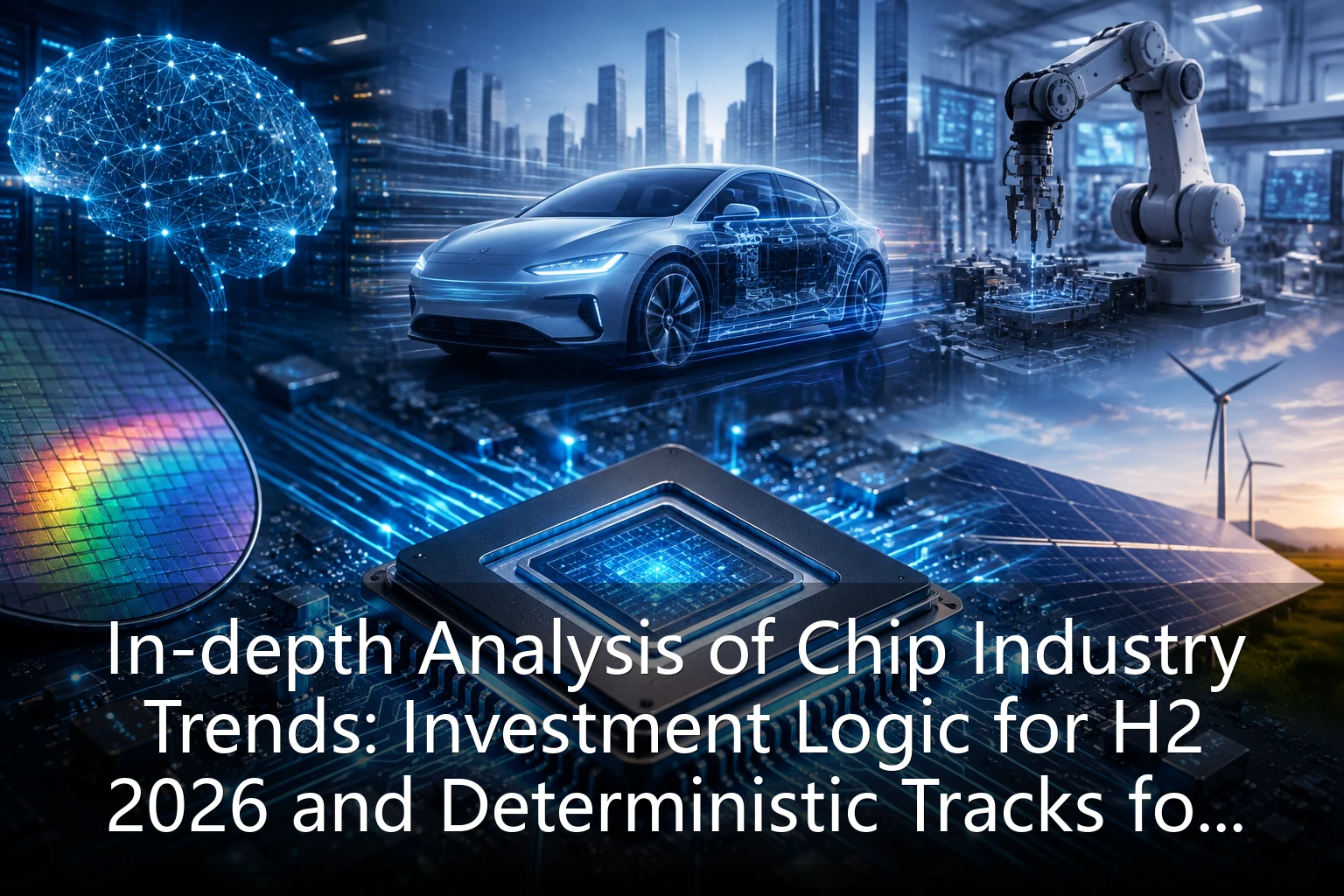

The global semiconductor industry is ushering in a new wave of investment. A latest report from SEMI shows that global semiconductor cap ex is expected to reach a record $250 billion in 2026, up 15% year-on-year. This figure not only surpasses the peak of 2022 but also marks the industry entering a new expansion cycle.
AI chip demand soars, cap ex growth accelerates
AI chips are the core engine of this cap ex growth. As generative AI moves from cloud to edge devices, demand for high-performance computing chips is growing exponentially. TSMC, Samsung, and Intel are increasing capacity investments in 3nm and below processes. TSMC plans cap ex of up to $40 billion in 2026, 70% of which will be used for advanced processes and packaging technologies. Design companies like Nvidia and AMD are also expanding R&D investment, driving AI chip performance to double every year.
Autonomous driving and IoT: the second pole of long-term growth
In addition to AI, autonomous driving and IoT are also important drivers. Demand for automotive chips continues to rise, with each electric vehicle carrying an average of over 2,000 chips, far exceeding the 500 chips in traditional fuel vehicles. Automakers such as Tesla and BYD are increasingly developing their own chips, further boosting cap ex. In addition, the construction of 5G/6G base stations, smart homes, and industrial IoT has steadily increased demand for low-power chips, providing long-term support for the semiconductor market.
Domestic substitution and policy support: new momentum for regional investment
Geopolitical tensions have prompted countries to strengthen their domestic chip manufacturing capabilities. The follow-up plan of the US CHIPS and Science Act will add $50 billion in subsidies, and the EU Chip Act aims to achieve 20% of global advanced process capacity by 2030. China is also accelerating mature process expansion, with SMIC's cap ex expected to exceed $10 billion in 2026. The domestic substitution logic brings huge opportunities for related equipment, materials, and EDA tool companies.
Investment logic revisited: tech barriers and cycle inflection points
From an investment perspective, the chip industry has high barriers and a long track. Mature process expansion brings stable cash flow, while advanced processes offer explosive growth potential. The current cap ex cycle is in an upward phase, but inventory cycle fluctuations need to be watched. SEMI data show that global chip inventory turnover days will drop to 85 in 2026, with supply and demand approaching balance and price pressures easing. Investors are advised to focus on leading companies with technology moats, as well as companies with differentiated advantages in AI, automotive, and other segments.
Key data at a glance
- Global semiconductor cap ex in 2026: approx. $250 billion
- Year-on-year growth: 15%
- Main drivers: AI chips (35%), automotive chips (25%), 5G/6G (15%)
- Asia-Pacific cap ex share: 62%
In summary, global semiconductor cap ex has repeatedly hit new highs, reflecting market consensus on the long-term chip gap. Whether it is the computing power revolution brought by AI or the underlying demand for the Internet of Everything, chips as the cornerstone of the digital economy are redefining their investment value. For investors, understanding technology evolution paths and grasping cycle rhythms will be key to sharing the industry's growth dividends.