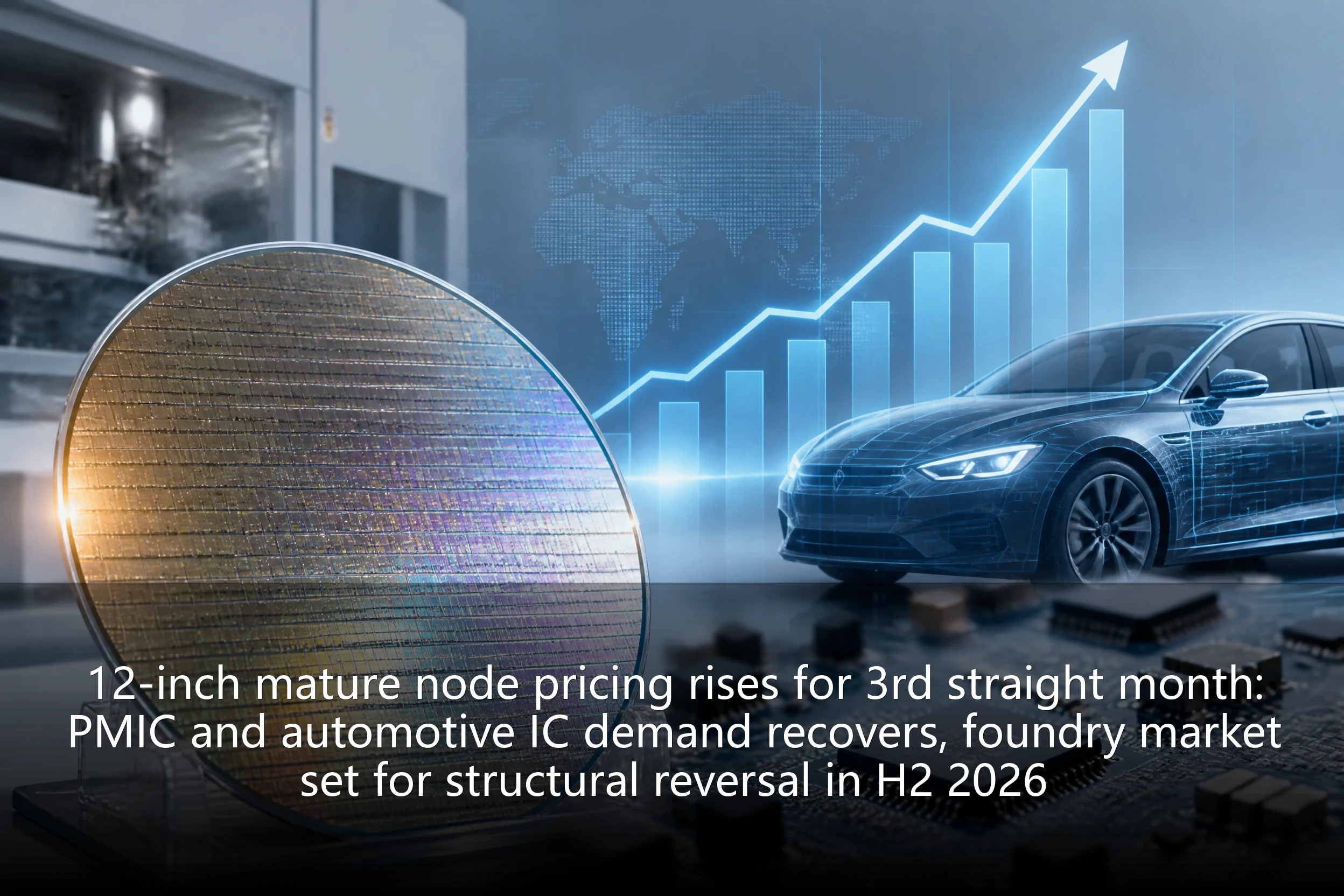
In early August 2026, the global semiconductor supply chain received a key signal: 12-inch mature node foundry pricing had stabilized and rebounded for three consecutive months. Since H2 2024, driven by weak consumer electronics demand and high industry inventories, mature nodes faced immense pricing pressure. However, entering Q3 2026, this trend showed a substantial reversal. The strong recovery in demand for Power Management ICs (PMIC) and automotive Microcontroller Units (MCU) is becoming the core engine driving this pricing rebound.
As a professional observation platform focusing on the Singapore Exchange (SGX) technology and semiconductor sectors, we note that the stabilization of mature node pricing is not a brief technical rebound, but the result of supply-demand restructuring after a deep inventory destocking cycle. For investors and procurement decision-makers focused on semiconductor trends, wafer pricing, and IC market dynamics, understanding the underlying logic of this structural reversal is crucial.
1. Pricing Data Interpretation: Bottoming and Rebounding of 12-inch Mature Nodes
Based on the latest tracked foundry pricing data, from June to August 2026, foundry prices for 12-inch mature nodes (mainly 28nm to 90nm nodes) saw steady increases. Although the overall growth remains moderate, the three consecutive months of sequential growth has broken the nearly two-year unilateral downward expectation.
Specifically, pricing for 28nm and 40nm nodes at some top foundries has recovered by 3% to 5% from the trough in Q1 2026. While this increase is less aggressive than advanced node price hikes, it marks a substantial restoration of profitability for mature node production lines that have long suffered margin pressure. More notably, this pricing stabilization is not limited to specific manufacturers or regions, but shows industry-wide resonance.
Observing from the capacity utilization dimension, 12-inch mature node lines, which previously fell below 70% at the end of 2025, have mostly recovered to a healthy level of around 85%. Some wafer fabs focusing on automotive and industrial-grade chip foundry have even seen capacity utilization exceed 90%. This rapid increase in capacity utilization gives foundries confidence in pricing recovery, directly reflecting the urgency of downstream restocking demand.
2. Demand-Side Deconstruction: Why PMIC and Automotive ICs are the Vanguard of the Rebound?
The fundamental driving force behind this mature node pricing recovery stems from the better-than-expected recovery in specific downstream end-demand. After a prolonged inventory adjustment, power management chips and automotive electronics first reached a substantial inflection point in demand.
1. Full-scale Explosion of PMIC Demand
PMICs are core components in electronic devices responsible for voltage conversion, regulation, and battery management, widely used in smartphones, laptops, home appliances, and new energy vehicles. Since PMICs are present in almost all electronic terminals, their demand trend is often seen as a barometer for the overall prosperity of the semiconductor industry.
In H1 2026, as the global consumer electronics end-market gradually warmed up, especially with the accelerating penetration of AI phones and AI PCs, both the volume and performance requirements for PMICs increased significantly. AI terminal devices, due to increased computing power, have higher requirements for power management, and the per-device PMIC value has grown substantially compared to traditional devices. In addition, the continued expansion of the new energy vehicle market, particularly the popularization of 800V high-voltage fast charging technology, has directly driven strong demand for automotive PMICs. This multi-point demand pattern has led PMIC design companies to increase orders to foundries, becoming the core force driving 12-inch mature node capacity utilization and pricing.
2. Strong Return of Automotive MCU Orders
Automotive electronics is another key area driving the reversal of mature node trends. Automotive MCUs mainly use 40nm to 90nm mature node processes and are the brains controlling various electronic functions in vehicles. In 2025, the global automotive industry experienced a severe destocking cycle, with automakers drastically cutting chip procurement orders.
However, entering 2026, with smart cockpits, Advanced Driver Assistance Systems (ADAS), and in-vehicle infotainment systems becoming standard in new models, demand for automotive chips saw an explosive recovery. Especially in the Chinese new energy vehicle market, under fierce intelligent competition, the upgrade speed of new models' electrical and electronic architectures has far exceeded expectations, and demand for high-performance automotive MCUs has grown geometrically. This sudden release of demand caused unprepared supply chains to tighten, and automotive chip design companies quickly added orders to foundries, directly driving up pricing for related mature nodes.
3. Supply-Side Reshaping: Rebalancing Inventory Clearance and Capacity Expansion
Alongside demand-side recovery, profound supply-side adjustments have created necessary conditions for this pricing rebound. The cyclical fluctuation of the semiconductor industry is essentially caused by supply-demand time mismatches. The current supply-side landscape is in a delicate rebalancing phase.
1. Bottoming of Global Semiconductor Inventory Cycle
After six quarters of active destocking, the inventory levels of the global semiconductor supply chain have basically returned to healthy levels. Based on recently disclosed financial reports from major IC design companies and terminal manufacturers, inventory days have normalized, and some segments even face low inventory situations.
This inventory normalization means downstream customers have officially moved from the "destocking" phase to the "restocking" phase. In the early stages of restocking, due to lingering doubts about future demand, customers usually adopt cautious pull strategies; but as terminal sales data continues to confirm, restocking efforts gradually increase. The strong return of PMIC and automotive IC orders is a direct reflection of this active restocking behavior. The bottoming of the inventory cycle provides solid bottom support for foundry pricing.
2. Slowing Pace of Mature Node Capacity Expansion
During the global chip shortage of 2021 to 2022, major foundries announced large-scale mature node expansion plans. However, semiconductor production lines typically require 18 to 24 months to build. When this new capacity was released centrally in 2024 to 2025, it coincided with an industry downturn, exacerbating the supply-demand imbalance for mature nodes.
Facing continuous pricing pressure and declining capacity utilization, some foundries actively slowed their expansion pace in H2 2025, delaying the move-in of some equipment. This supply-side self-regulation effectively controlled the scale of overcapacity. Entering 2026, with previous expansion capacity fully released, new capacity growth has become relatively limited. Against the backdrop of sudden demand-side strength, restricted marginal supply growth contributed to the rapid stabilization and rebound of pricing.
4. Supply Chain Transmission: Chain Reaction from Wafer Pricing to IC Trends
The rebound in foundry pricing will inevitably transmit downstream along the supply chain, having profound impacts on overall IC trends. For semiconductor procurement decisions and investment layouts, understanding this transmission mechanism is crucial.
First, for fabless IC design companies, rising foundry costs will directly compress their gross margin space. Especially for small and medium-sized design companies with severe product homogenization and weak bargaining power, they will face significant cost pressure. However, design companies with core technologies and high-quality customer bases in currently tight segments like PMICs and automotive MCUs can pass cost pressure downstream through product price hikes, thereby maintaining stable profitability.
Second, terminal electronic device manufacturers will face the challenge of rising chip procurement costs. In consumer electronics, due to fierce competition, device manufacturers often find it difficult to digest rising costs through significant price increases, and may need to respond through design optimization or finding alternatives. In automotive electronics, because chip costs account for a relatively small proportion of the whole vehicle, and automotive chip certification cycles are long with high replacement costs, automakers are relatively less sensitive to chip price increases and more easily accept chip price hikes transmitted from foundry costs.
From a broader semiconductor market perspective, this mature node pricing rebound is expected to drive an overall IC market recovery. With upstream costs solidifying and downstream demand confirmed, the IC design industry is expected to enter a healthy development stage of both volume and price increases, thereby promoting overall valuation repair for the semiconductor sector.
5. SGX Semiconductor Investment Strategy: Seizing Structural Reversal Opportunities
For investors focusing on the SGX technology and semiconductor sectors, the reversal of this mature node trend provides a clear investment mainline. Singapore, as an important hub for the global semiconductor supply chain, gathers many high-quality semiconductor equipment and materials companies, and its market performance is highly correlated with global semiconductor prosperity.
- Focus on foundries with capacity utilization improvements:As mature node pricing stabilizes and rebounds, foundries with high capacity utilization will see significant earnings elasticity. It is recommended to focus on wafer fabs with deep accumulation in PMIC and automotive chip foundry, whose profitability is expected to see substantial improvement in H2 2026.
- Position in design companies driven by automotive electronics and AI terminals:Demand recovery is not evenly distributed, and IC design companies focusing on automotive MCUs, automotive PMICs, and AI terminal power management chips are at the core beneficiary end of this trend. These companies have high order visibility and certain bargaining power, making them high-quality targets for medium to long-term allocation.
- Beware of the risk of weaker-than-expected consumer electronics recovery:Although PMIC and automotive IC demand is strong, uncertainty remains regarding the recovery strength of global consumer electronics end-demand. If smartphone and PC replacement cycles fall short of expectations, related consumer IC pricing may face fluctuations, requiring careful assessment of related companies' business structures.
In summary, the three consecutive months of stabilization and rebound in 12-inch mature node pricing in August 2026 is an important marker of the reshaping of the semiconductor industry's supply-demand landscape. It not only declares the complete end of the previous prolonged destocking cycle but also signals that a structural recovery driven by automotive electronics and AI terminals is fully unfolding. For participants and investors in the semiconductor supply chain, closely following wafer pricing trends and accurately grasping supply-demand changes will be key to winning in this new industry cycle.
Going forward, we will continue to track the latest dynamics of the global semiconductor market, providing you with in-depth market interpretation and investment strategy analysis to help you seize opportunities in the ever-changing chip market.